

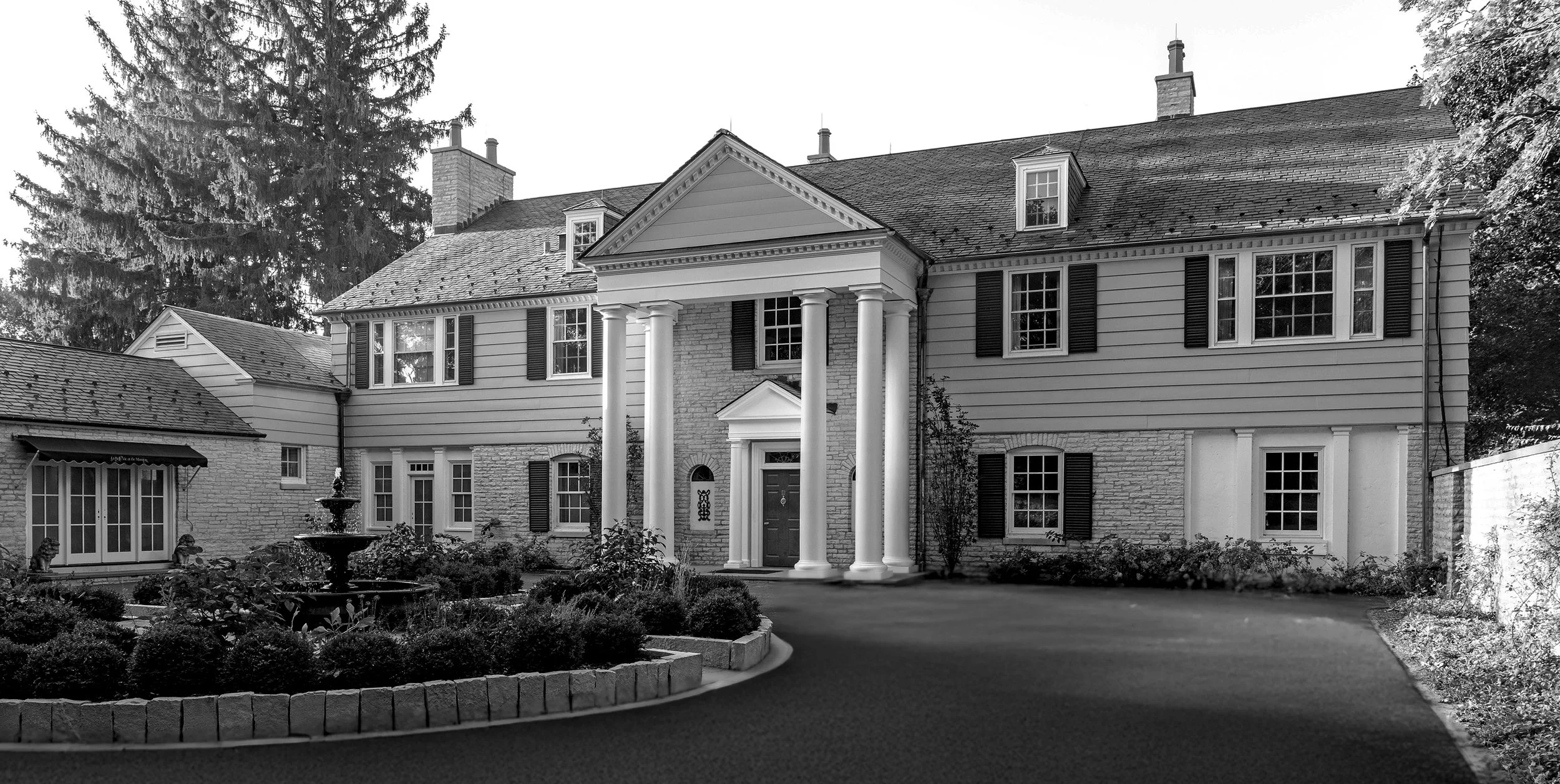
WELCOME TO THE MANSION
Nestled beneath the forested canopy of Trout Valley, a series of narrow, winding roads leads you to the Mansion—a landmark rich with history and character.
In the 1920s, Chicago businessman John D. Hertz assembled nearly 900 acres of farmland in Cary, Illinois, creating a sweeping estate named Leona Farms in honor of his eldest daughter, Leona. The estate had two regulation sized polo fields, trout ponds, extensive gardens, an art deco pool and perhaps most important to Hertz, horse stables and barns.
The estate was alive with activity, with nearly one hundred workers keeping everything running. Polo matches, elegant parties, and glittering gatherings made Leona Farms a social magnet.
As a gift for his daughter, John D. Hertz began building a grand home on the Leona Farms estate in 1929 — intended for Leona Hertz Ettlinger, her husband Alfred, and their young son, John. The young family took residence in 1933 and the house was fully furnished in 1934.
The family’s time in the home was brief. In 1944, Leona Farms, including the estate, was sold to Otto Schnering, founder of Curtiss Candy Company.
The property became an agricultural hub and school, with prize cattle, poultry, hogs, and even mink. By the 1950s, the Curtiss Breeding Service brought international recognition for its pioneering work in cattle breeding. In the decades that followed, much of the original Hertz estate was transformed into the community of Trout Valley. Hertz’s own villa was lost to fire in the 1970s. But Leona’s house — the Mansion — endured.
In 2023, Trout Valley resident Sue MacInnes purchased the Mansion and began extensive renovations and improvements — work that continues today.

HISTORY OF THE MANSION
A GLIMPSE INTO THE PAST

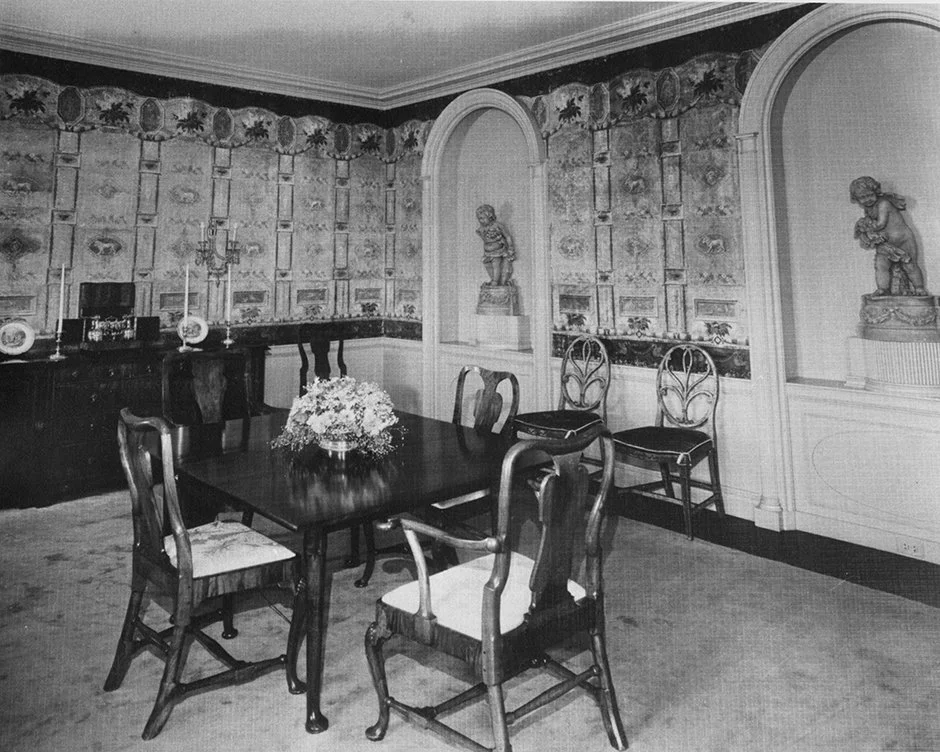
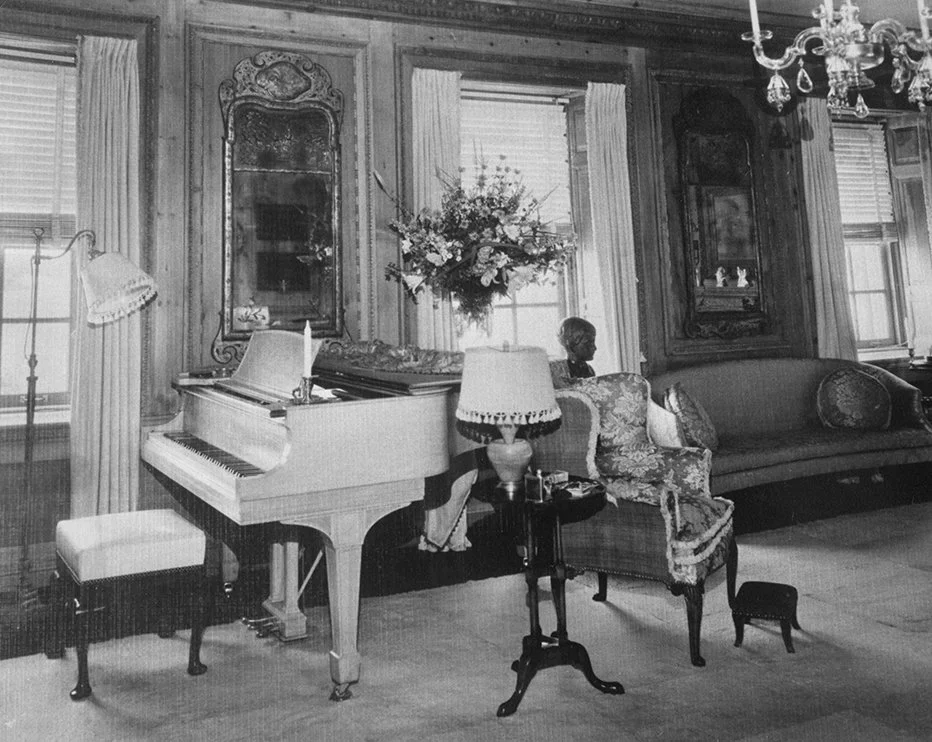
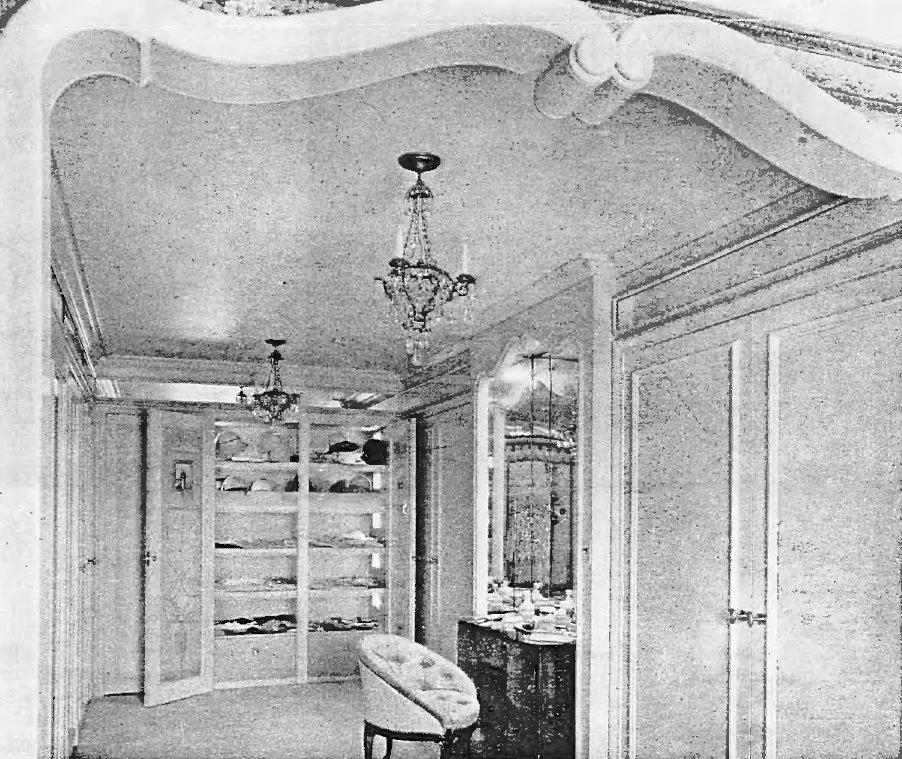
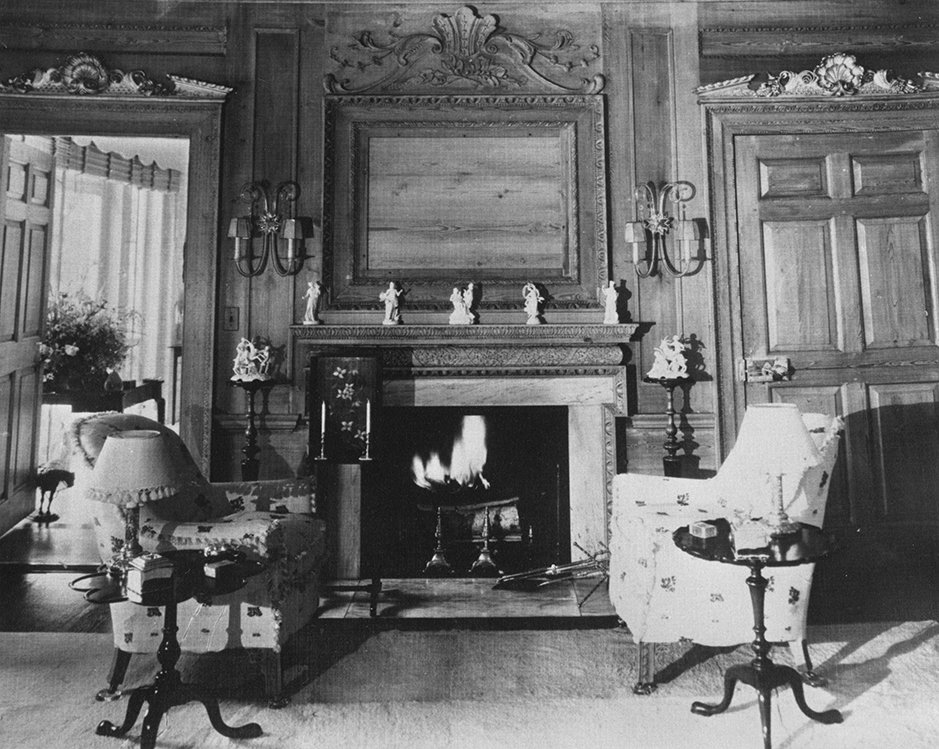
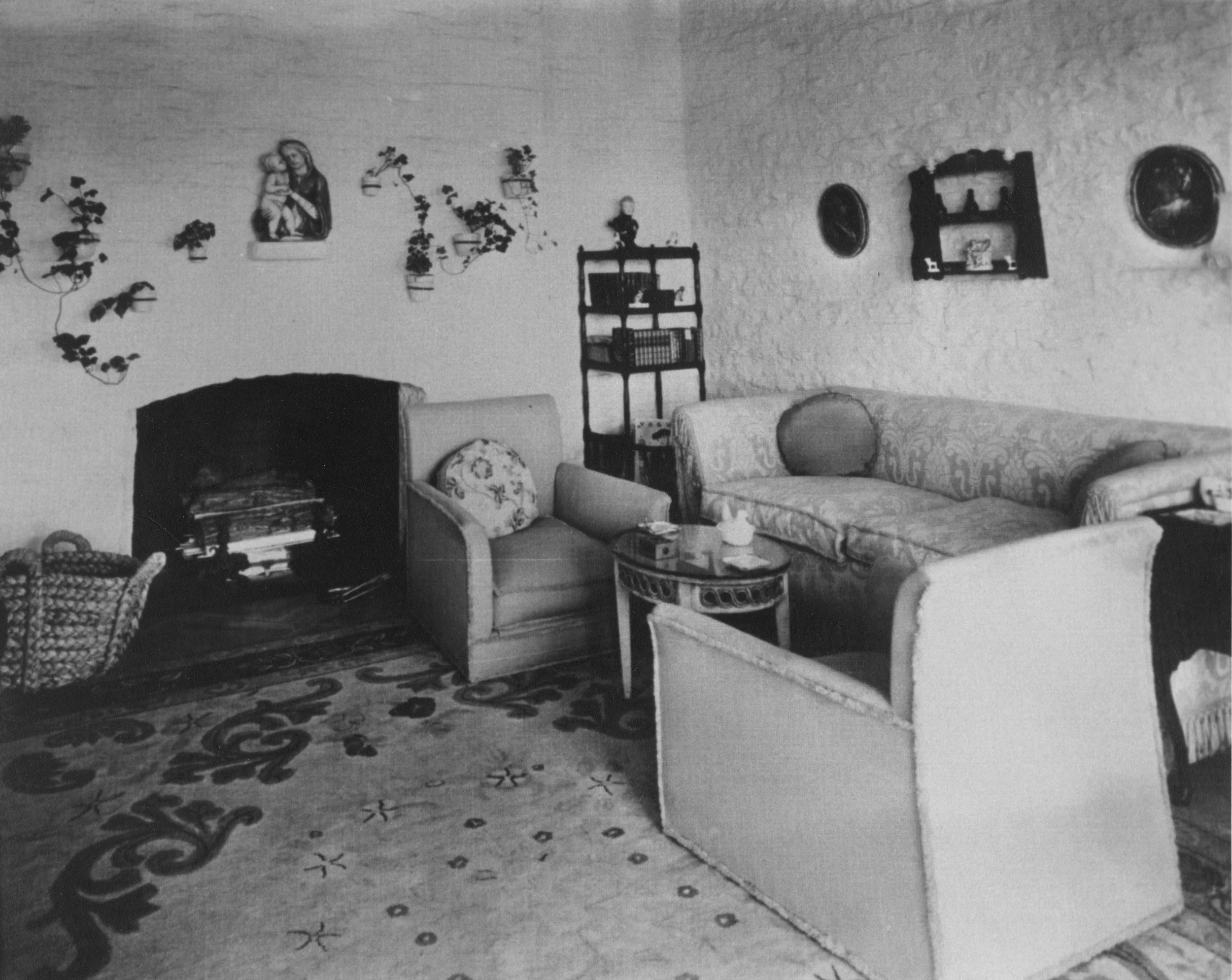
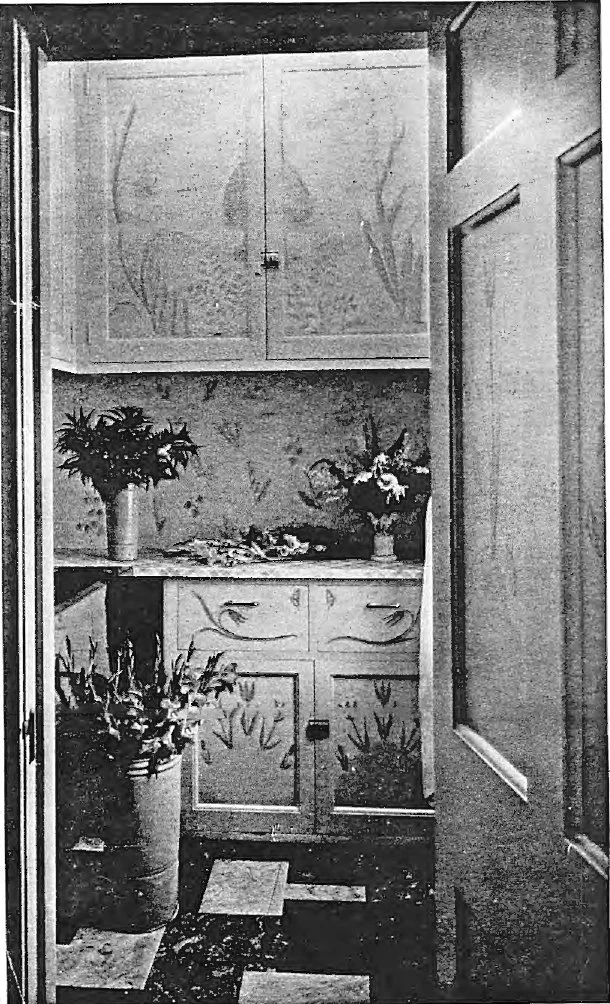
Once a private residence, the Mansion has been thoughtfully reimagined as an intimate gathering place for small groups seeking cultural, culinary, and artistic experiences.
Wherever possible, the Mansion’s original architectural elements have been carefully restored and updated to meet current standards. In other spaces, rooms have been re-imagined with a unique vision, carrying the Mansion into the modern era with a new purpose. Much work has been done to recreate the original blueprints and plans. In fact, the renovation work has included items that were originally planned but not executed.
-
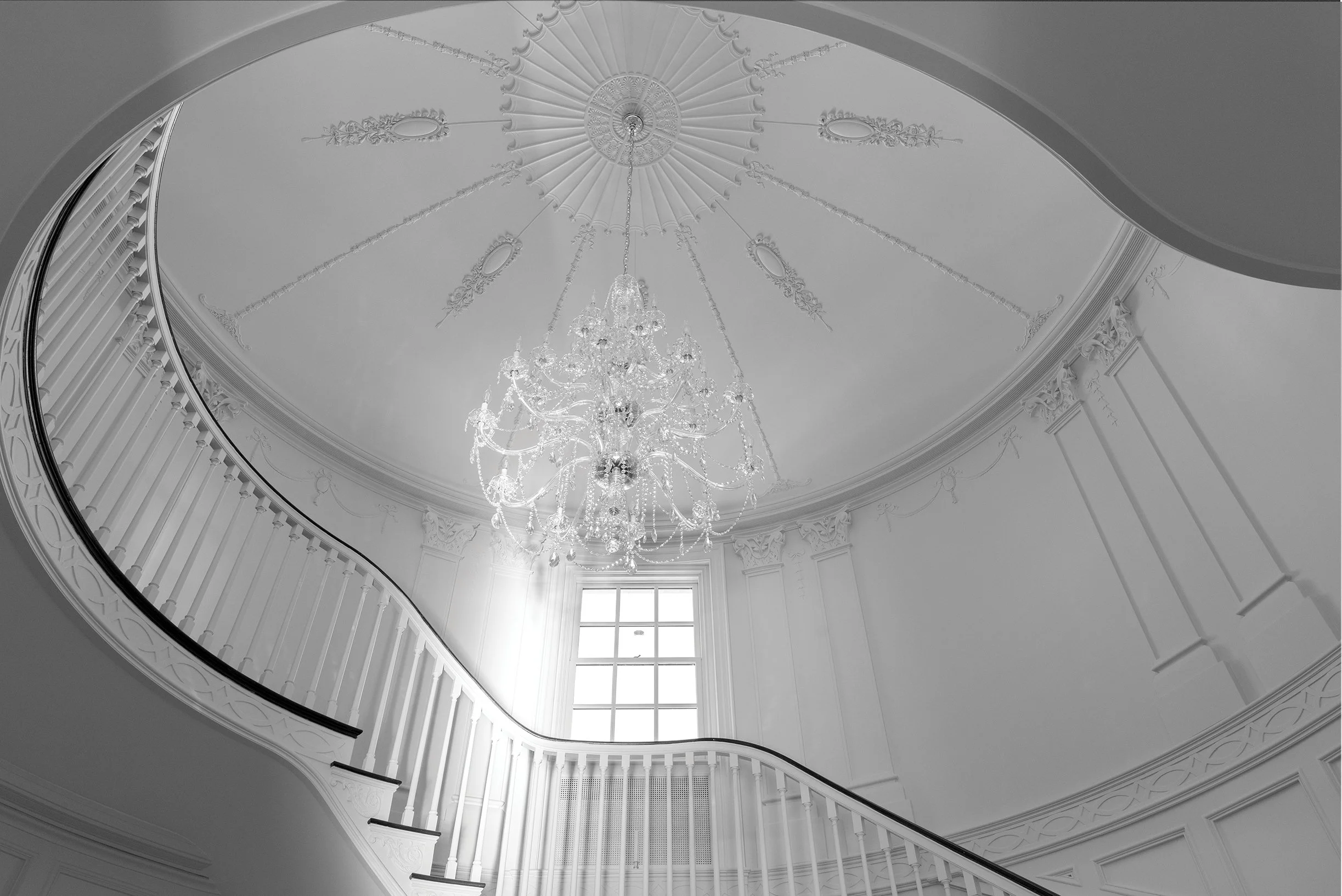
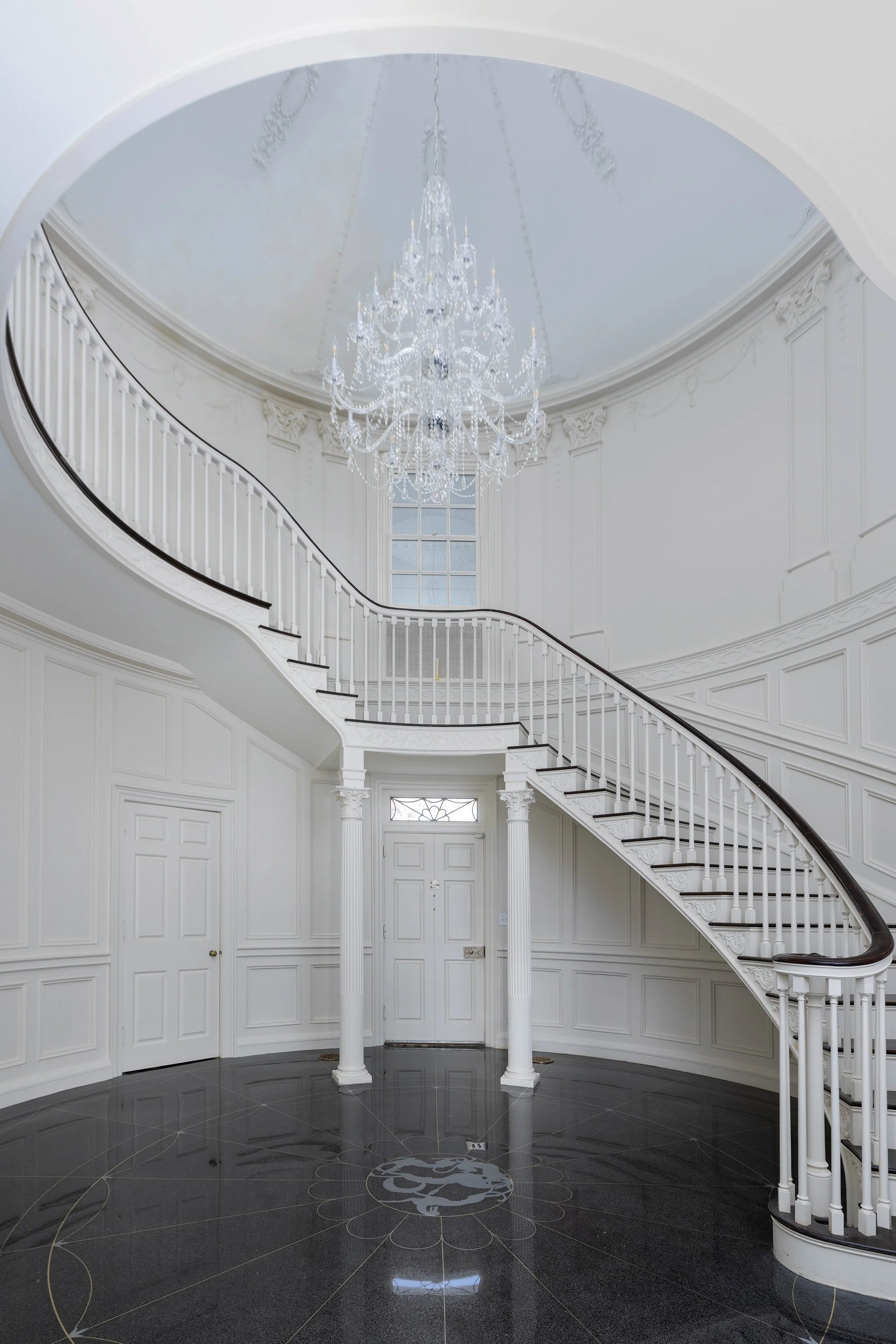
The Foyer
During the period of Leona’s house construction, walls were made with gypsum plaster and metal lath. This is an art as well as a hindrance today, as renovation work takes time and expertise to repair and renovate this type of plaster.
-
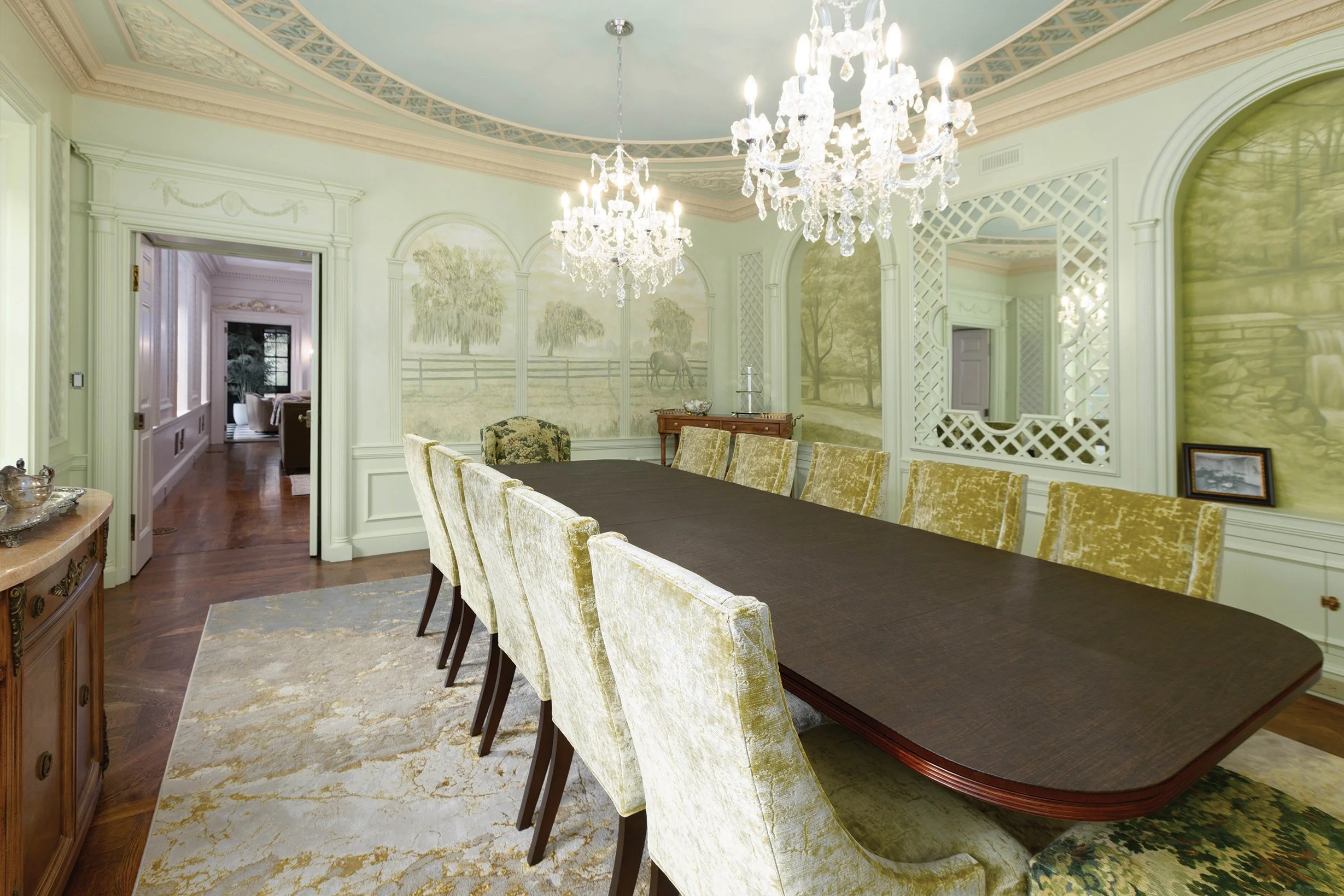
The Dining Room
The design of the dining room is inspired by Ladurée in Paris, famous for inventing and popularizing the Parisian macaron, a French meringue sandwich cookie. The room features a pastel color palette, including the classic celadon green.
-
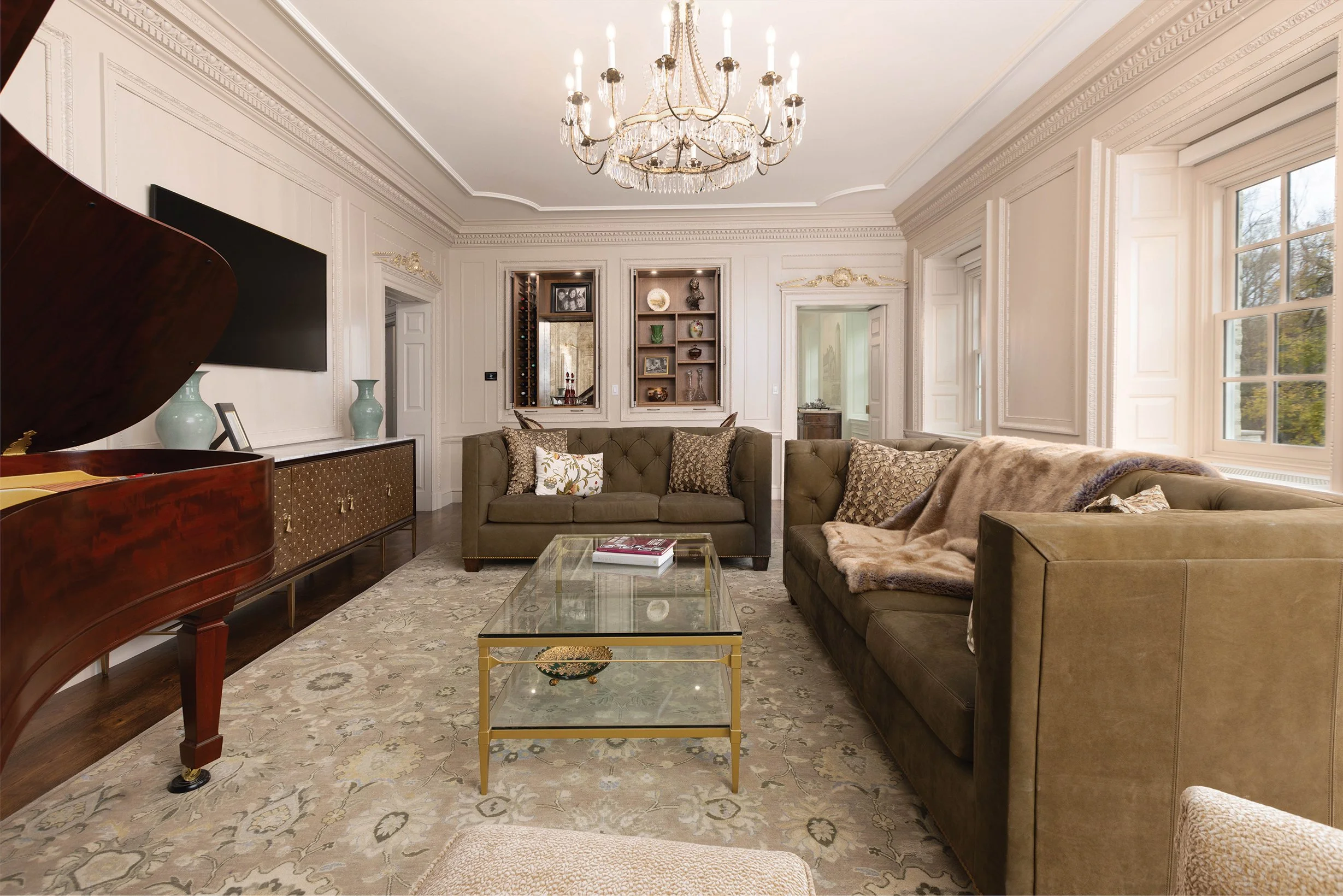
The Living Room
The woodwork and moldings were part of the original house and were imported from a 16th century Scottish castle.
The wood on the walls had been stripped of paint, leaving them discolored, with visible scrape marks. It was decided to paint the paneling and reconstruct the original gilding.
-
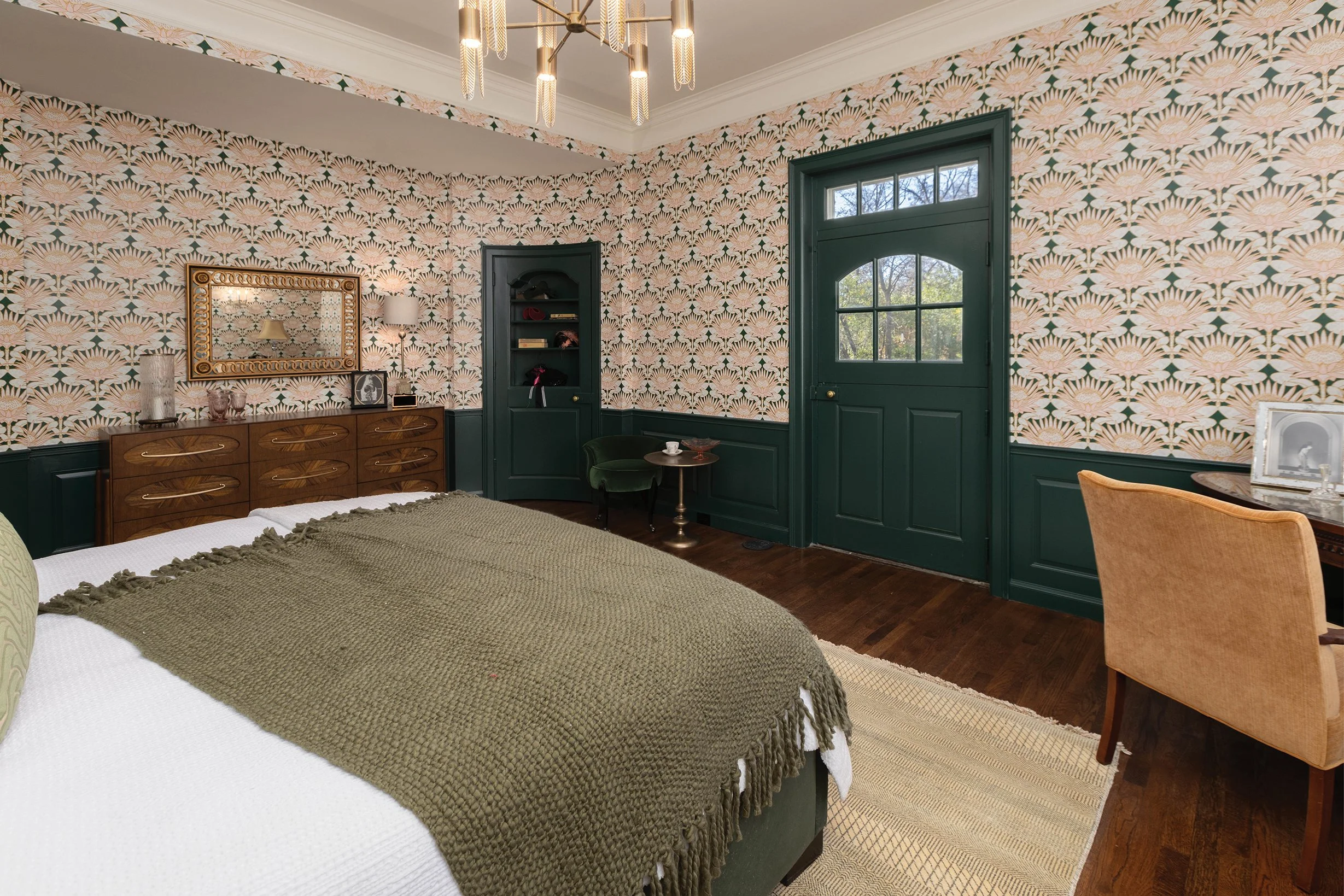
Myrna Loy Room
Designed in a classic Art Deco style, the space includes several features that were unusual in their time. A private exterior entrance allowed guests to come and go discreetly, while an en suite bathroom — a rarity in that period — added an extra level of comfort and luxury.
-
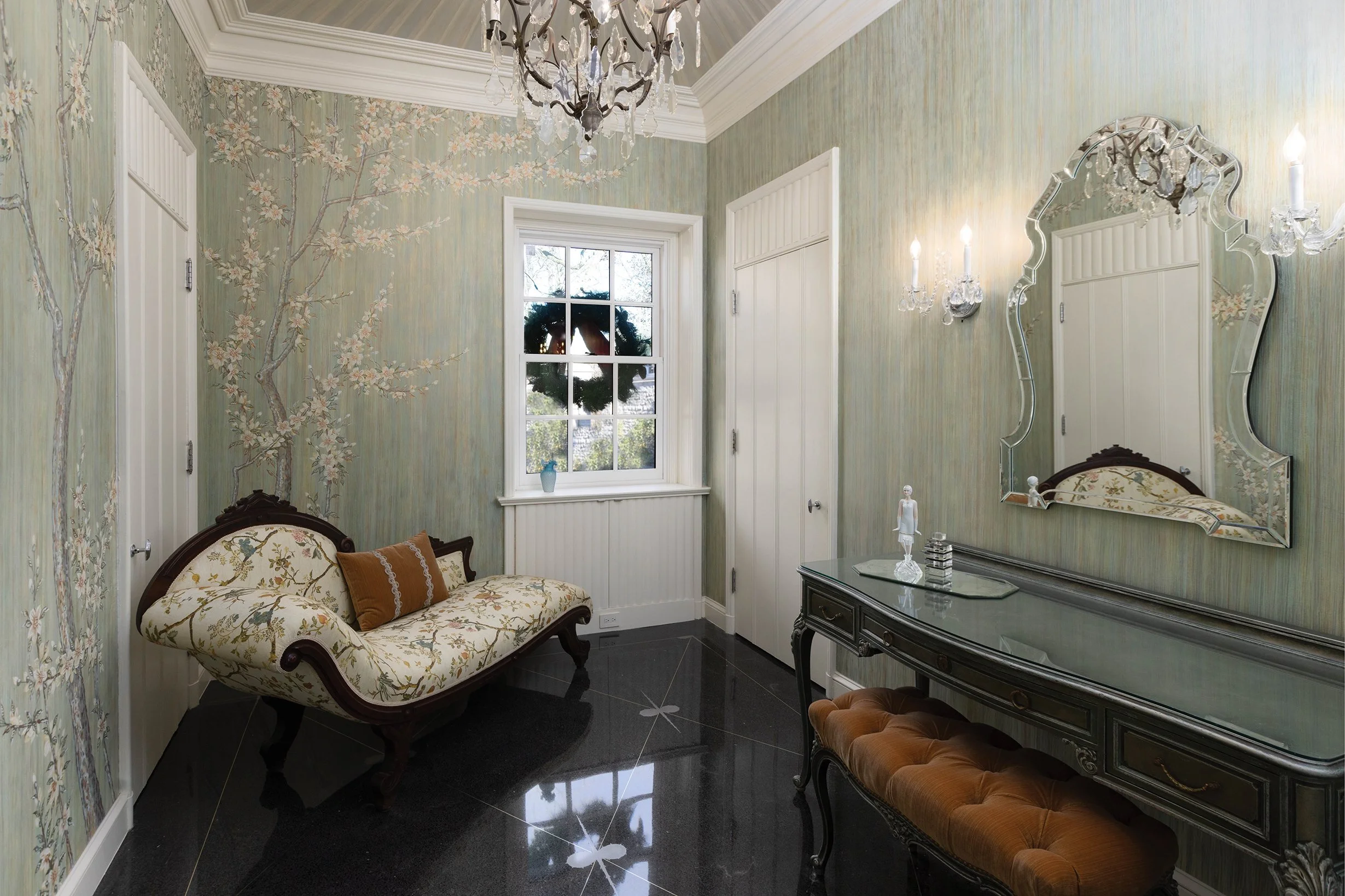
Powder Room
The powder room has been thoughtfully reimagined with original artwork on the walls and ceiling, designed to capture the Art Deco era.
The central light fixture, which once hung in the foyer, has been scaled down to suit the space, while the original sconces remain in place. Like every fixture in the house, they were fully rewired to meet modern electrical standards.
-
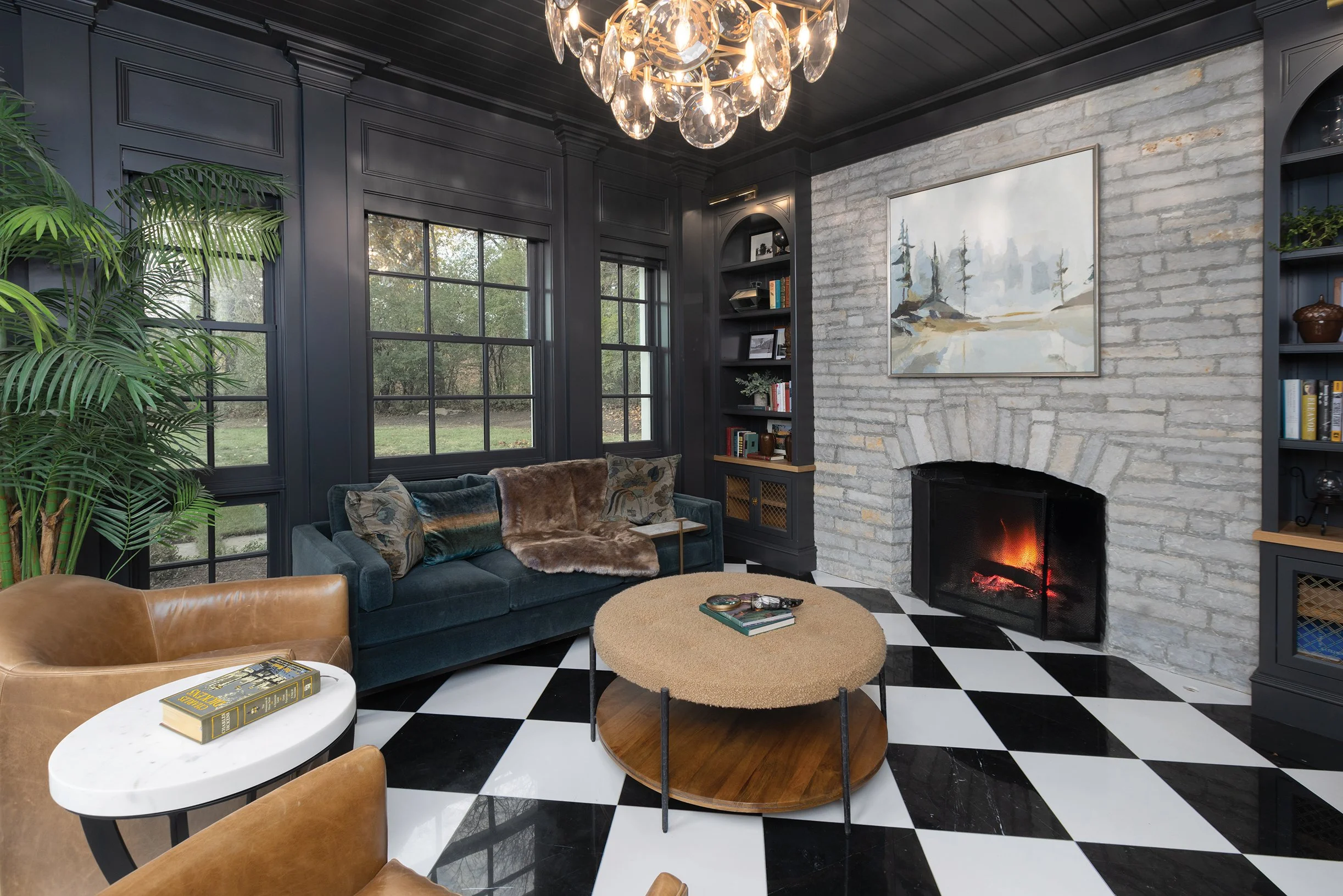
The Conservatory
The conservatory was originally an open-air porch featuring a stone fireplace and its own outdoor entrance. Over time, the space was enclosed, and the stonework was hidden beneath multiple layers of paint.